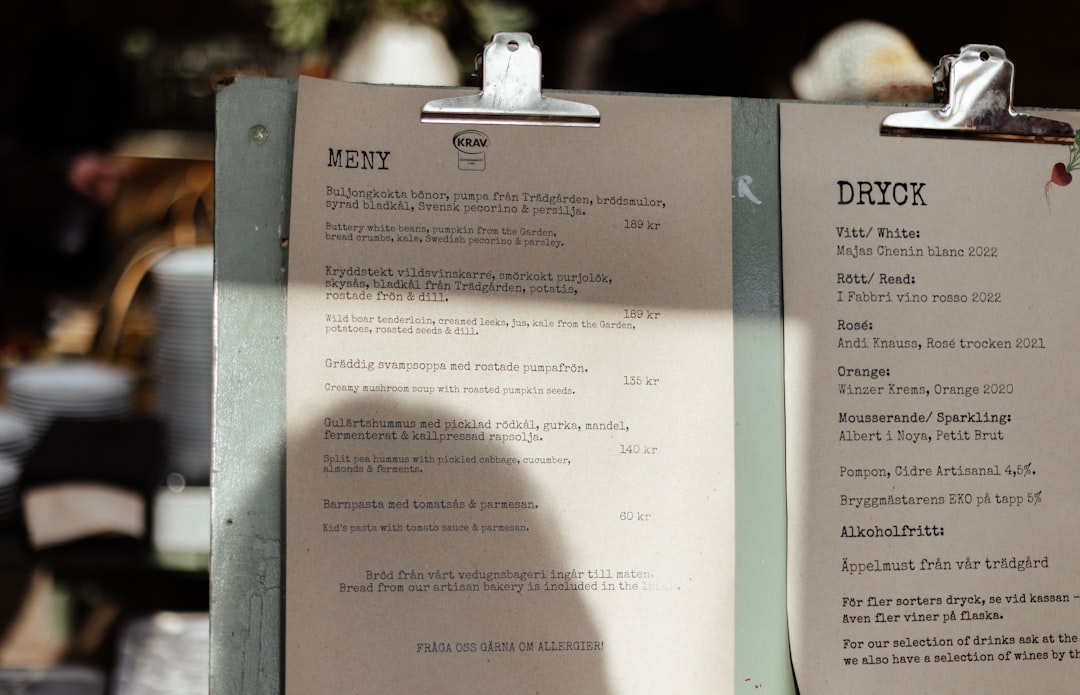
I was standing at the host stand of a nice little gastropub last Tuesday, waiting for the owner. I glanced down at the menu. It was gorgeous. Thick card stock, clean typography, a new section for summer cocktails with a little watercolor illustration of a sprig of mint. You could tell they cared. This wasn’t some slapped-together print job; this was their craft, presented perfectly.
Then my phone buzzed. It was the owner texting, “Running 5 min late, check out our new summer menu online!” So I did. I went to their website, clicked “Menu,” and opened the PDF.
The cocktail section was winter drinks. The “Market Fish” was still listed as halibut, not the sea bass on the paper version. The burger, $17 on paper, was still $15 online.
The owner walked up, smiling, ready to talk websites. I just held up my phone next to their beautiful paper menu. “Which one of these is lying?” I asked.
He looked. His smile faded. “Oh. Yeah. We updated that months ago. I kept meaning to send the new file to our web guy.”
That “paper ghost” is sitting on a counter, or in a rack, or on a table in your business right now. It’s the perfect, current, tangible version of what you sell. And its digital twin, the version 90% of potential customers will see before they ever walk in your door, is wrong. It’s out of date, incomplete, or just… different.
This isn’t a small oversight. It’s a silent credibility killer and a direct leak in your revenue.
Why The Digital Menu Isn’t Just a “Copy”Think about your own behavior. You’re deciding where to go for dinner. You pull up a few places, you click “Menu.” You’re scanning for a few key things: do they have the thing you’re craving? What’s the price point? Any interesting specials? If the menu looks old, sparse, or just “off,” you swipe closed. You’ve moved on. You never even saw the beautiful physical version.
The digital menu isn't a backup. It’s the front door. It’s the first impression of your product. If it’s wrong, you’re telling people, before they’ve met you, that you’re not detail-oriented, that you don’t update things, that you might not even be open. You’re creating doubt before they’ve taken a single step toward you.
The Cost of the GhostLet’s make it painfully concrete.
* The Confused Customer: They come in because the online menu said you have a vegan burger. You don’t anymore. They’re disappointed before they’ve even ordered a drink. The experience is soured from minute one.
* The Angry Customer: They order the steak online because it was listed at $24. The bill comes, it’s $29. An argument at the table, an awkward conversation with the server, a bad taste left behind. All because of a PDF you forgot to update.
The Lost Customer: They’re searching for “weekend brunch.” Your paper menu has a fantastic brunch section. Your website still says “Brunch Coming Soon!” from six months ago. They assume you don’t serve brunch and go to the place down the street that does* have their brunch menu online. You never even knew they were looking.Your best marketing is the product itself. If the first version of your product a customer sees is wrong, you’ve already lost.
This isn’t about becoming a tech wizard. It’s about closing a loop you’ve already started.
1. The One Source of Truth: Pick one menu to be the master. It should probably be a digital file (a Google Doc, a Canva design, something editable). When you change a price, add a dish, or create a seasonal special, you change it there first. The printed menu becomes an output from that source, not the other way around.
2. Update in Triplicate: When the master menu changes, you now have three stops to make:
* Your website (replace the PDF or update the menu page).
* Your Google Business Profile (in the “Menu” section).
* Your delivery app profiles (if you use them). Yes, people check your direct menu against DoorDash.
3. Ditch the PDF (If You Can): A PDF is a static snapshot. It’s a photo of your menu from one day in history. Consider a simple, editable menu page on your website. It doesn’t need to be fancy. Text and prices. This is infinitely easier to update. If you must use a PDF, give it a clear version name in the file: “Summer_Menu_2026.pdf”. It’ll shame you into updating it next year.
I know the objection. “I’m running a business! I don’t have time to mess with the website every time we get a new cheese in!” I get it. But you have time to design, proof, and print new physical menus. You’re already doing the work. You’re just stopping at the last, most important mile: putting it in front of the customer who’s still at home, deciding.
That beautiful paper menu on your counter? It’s a ghost. It’s the shadow of what you could be showing the world. The only thing haunting your business is the gap between the real thing in your hand and the faded copy on the screen.
One thing you can do before tomorrow: Right now, pull out your phone. Go to your own website, find your menu. Then go look at your physical menu. Are they the same? I mean, exactly the same? If they’re not, you know what you’re doing for the next 20 minutes. Send that file. Make that edit. Bury the ghost.