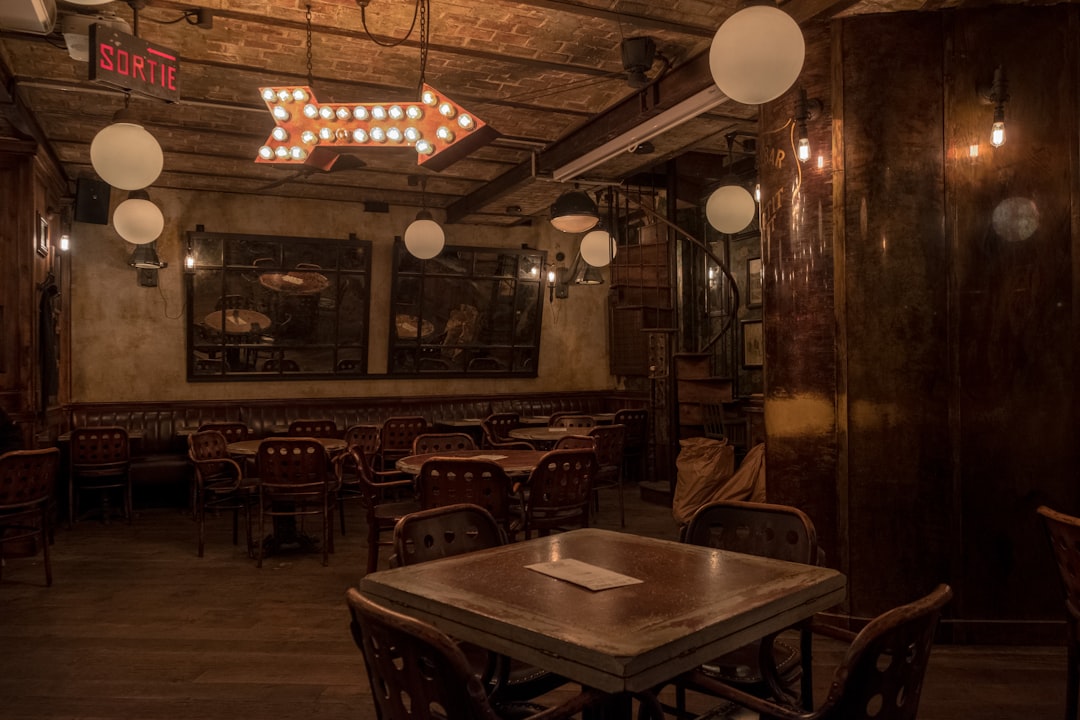
He poured a glass of Tempranillo, sliding it across the polished bar. “Just launched it last month,” he said, a real pride in his voice. “The photos, the vibe… it finally feels like us.” This was a good bar. Intimate, authentic, the kind of place you find once and then tell friends about. He’d invested in a custom website to match.
He ducked into the kitchen to check on an order. “Pull it up on your phone,” he called out. “Tell me what you think.”
I tapped the link from his Instagram bio. The screen went white. A sleek loading animation spun. And spun. I watched the little circle make three full rotations before the homepage finally painted in. I clicked “Menu.” Another white screen. Another spinning circle. Fourteen seconds later, the PDF menu finally rendered. I didn’t need to taste the wine to know the problem.
His beautiful front door had a broken lock. And he was losing customers over it.
This isn't about bad design. It’s about a fundamental misunderstanding of what a website does for a local business in 2026. We’ve been sold a lie that a website is a digital billboard, a place to showcase your brand’s soul. That’s part of it, sure. But first, and overwhelmingly, your website is a utility. It’s the digital equivalent of your hours on the door, your menu in the window, your phone number on the sign.
Customers aren't coming to admire your parallax scrolling. They’re coming with intent. They have a job to be done, and they want to do it fast.
The 10-Second Judgment
Think about the last time you searched for a local business on your phone. You’re hungry, you need a plumber, you’re looking for a haircut at 4 PM. You tap a website link. What are you doing?
You’re scanning. Frantically. Your brain is filtering for specific triggers:
* Is there a big, clear “Hours” or “Open/Closed” label?
* Can I see a list of services or a menu without downloading a PDF?
* Is there a phone number or address I can tap to call or get directions?
If those signals aren't immediate, you bounce. Data doesn't lie. A one-second delay in page load can drop conversions by 7%. For a local business, a “conversion” isn't just a sale. It's a phone call. A direction request. A walked-in customer.
Your website’s primary job isn't to impress. It’s to answer three questions faster than the search result below it.
The Slow-Loading Sin (And Its Quiet Cost)
Let’s talk about that 14-second menu. On the owner’s wifi, in his office, it loaded fine. In the real world, on a mobile network, with two bars of signal outside a coffee shop, it was a brick wall.
Every second of delay is a percentage of your potential customers leaving. They aren't seeing your beautiful food photography. They’re seeing a blank screen, and they’re assuming your business is closed, out of date, or simply doesn't care enough to function.
The culprits are almost always the same: huge, unoptimized image files (those beautiful photos), bloated code from fancy plugins or animations, and hosting that’s cheap for a reason. You paid for a sports car but you’re trying to drive it on a dirt road.
Before: A restaurant site with a 15MB hero image of the dining room, a PDF menu that requires a separate app to open, and a complex animation that loads before anything else. After: The same restaurant, with images compressed for the web, the menu as simple HTML text on a page, and every element prioritized for speed. The second site doesn't just load faster. It makes customers 300% more likely to find the info they need and act on it.The Menu That’s Hiding
The PDF menu. An icon of misplaced effort. You think you’re providing a professional, printable document. What the customer gets is a download prompt, a wait, an awkward zoom-and-pinch experience, and a file they can’t search.
Forget about the 20% of people who just won’t bother. Think about Google. Google’s bots can’t read the text inside your PDF menu. So when someone searches for “vegan tacos near me,” your amazing jackfruit carnitas plate is invisible. Your competitor, who has “jackfruit carnitas” as plain text on their website page, wins the spot. They didn't beat you on food. They beat you on a technicality you didn't know existed.
This is where a simple, honest use of AI can save you weeks of work. Tools exist now that can take your PDF menu, scan it, and spit out clean, structured HTML text in minutes. You don't need to be a coder. You just need to stop treating your menu like a document to be printed and start treating it like data to be found.
The One Thing You Can Do Today
You don’t need a new website. Not yet. You need a diagnosis.
Go outside. Walk down the block. Turn off your wifi. Open your phone’s browser. Navigate to your own website.
Now, try to do what a customer does.
1. Find your opening hours for tomorrow.
2. Find your phone number and tap to call it.
3. Find your core service or main menu item.
Time it. How many taps did it take? How long did you wait for pages to load? Was anything confusing?
Then, do the same for your two closest competitors. Be ruthless. Whose site was faster? Whose information was clearer?
The gap you feel in that moment is the gap in your business. It’s the table that sat empty, the call that went to voicemail, the customer who drove past your door because your digital “Open” sign was flickering.
Your website is your front door. Make sure it’s not just beautiful, but actually, reliably open.