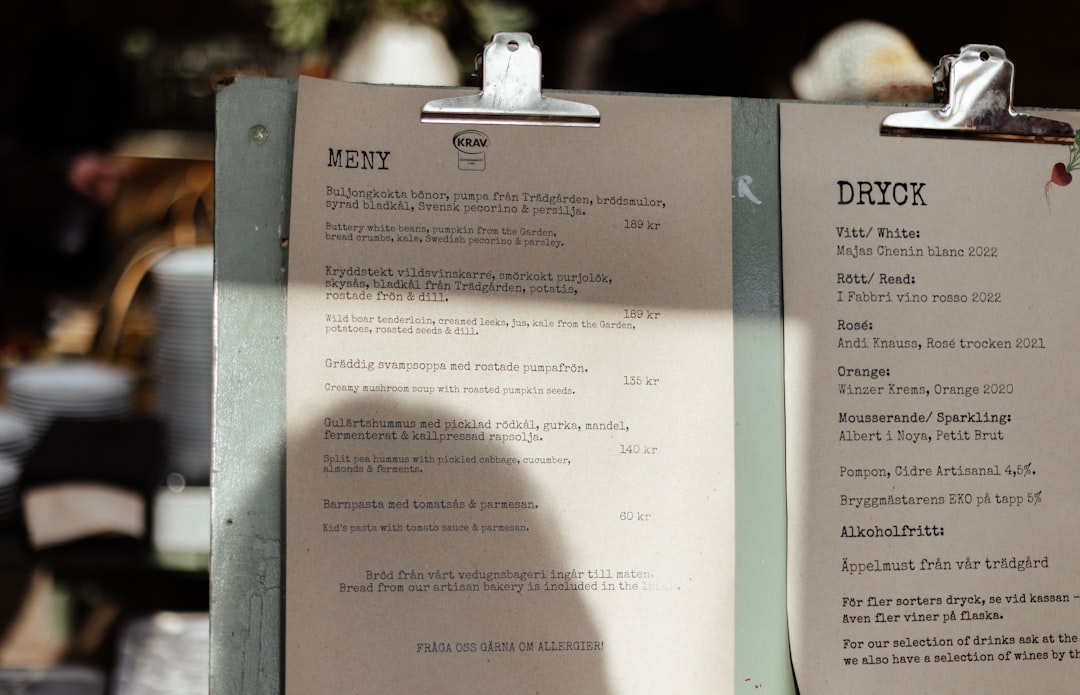
I was in a brewery last Tuesday, the good kind with the repurposed wood and the hazy IPAs. The owner, Mike, was telling me about his new burger menu. “We’re getting killed on Fridays,” he said. “People keep asking if we take reservations. We don’t, but they must not know that.”
I asked him how people were asking. He pointed to the phone on the wall. “They call. We tell them no. That’s it.”
So I pulled out my phone, went to his Instagram profile, vibrant, well-run, and tapped “Message.” I typed: “Hey, do you take reservations for a group of 6 on Friday?”
We watched my screen. Nothing. The phone on the wall didn’t ring. My message just sat there, in his Instagram inbox, unread. It’s probably still there.
“They’re asking,” I said. “You just can’t hear them.”
This isn’t about social media fame. It’s not about posting reels. This is about the fundamental mismatch between how people now try to talk to a local business and how that business is built to listen.
Your customer in 2026 carries a supercomputer. Their path of least resistance is not to find your number, dial, wait through rings, and talk to a possibly busy human. Their path is a text. A direct message. A tap on the “Message” button right inside Google Maps. It’s asynchronous, fast, and feels low-commitment.
Your business, if it’s like most, is still waiting for the phone to ring. That’s the broken answering machine. It only accepts one format of communication, and everyone else gets a busy signal.
The Three Silent Channels Killing Your Leads
First, Google Business Profile Messages. That little “Message” button on your listing is a direct line. Turn it on. I know, you’re worried about spam. But the spam calls you get are worse. A message there is a high-intent customer, already looking at your info, one tap away from asking “Are you open?” or “Do you have gluten-free options?” Ignoring that is like hanging up on them.
Second, Instagram and Facebook DMs. For restaurants, retailers, salons… this is the new front desk. A customer slides a photo of a product into your DMs and asks “Do you have this in stock?” If you reply in an hour, you’ve made a sale. If you reply in two days, you haven’t. They bought it from the place that answered in five minutes.
Third, your website’s contact form. This one’s a graveyard. Forms get sent to a generic email like `info@yourbusiness.com` that no one checks daily. Or worse, they go to an employee who left two years ago. That form submission is someone saying “I’m interested enough to type out my request.” Treating it as less urgent than a phone call is madness.
You’re running a 24/7 digital storefront but only staffing the phone for 8 hours a day. The lights are on, but the door is locked.
Before and After: The Two-Minute Rule
Let’s take Mike’s brewery. The before is what I saw: a beautiful Instagram, zero response to DMs. Phone calls about reservations get a “no.” End of story.
The after is simple, and it cost him nothing but five minutes of setup. We turned on Google Messages. We set up quick replies: “Thanks for messaging! We don’t take reservations, but we’d love to see you. Groups over 8? Send us a DM and we’ll try to hold a table.” We linked his Instagram notifications to his main manager’s phone.
The result? He’s not getting more phone calls. He’s converting the inquiries he was already missing. Last Friday, a group of ten DMed him. He saw it instantly, replied “We’ll save the big corner table for you if you’re here by 6.” They came. They spent over $400. That money was always trying to find him. It just needed a door that was open.
Where AI Actually Fits (And Where It Doesn’t)
This is where an AI tool can be a practical help, not just hype. You’re not using it to write your life story. You’re using it to keep the digital door propped open when you’re busy making the product or serving the customer in front of you.
A simple AI chatbot on your website can answer the 10 questions you get every day: “What are your hours?” “Where are you located?” “Do you have vegan options?” It can do it instantly, at 2 PM or 2 AM. It’s not replacing you. It’s catching the easy stuff so the phone call you do get is the complex, high-value one.
For DMs and texts, you can use saved replies or brief, polite auto-responses: “Hi! This is Mike at The Brewery. We’re in service now but will reply ASAP. Need our hours or address? Check our Google listing here: [link].”
The limit is honesty. The AI or auto-reply cannot fake it. It must be a bridge to a real human, not a wall. It’s there to say “We hear you, and a person will follow up,” not to have a frustrating, circular conversation about your wedding package pricing.
The One Thing to Do Before You Go Home Today
Pick one channel you’re ignoring and open it.
Go to your Google Business Profile right now. See if “Messages” is on. Turn it on. Your phone will get a new app, the Google Business Profile Manager. Download it. Let it notify you.
Or open your Instagram business profile. Go to Settings > Notifications. Turn on Direct Message alerts. Make sure they go to someone who can answer.
That’s it. You don’t need a new phone system. You don’t need a marketing consultant. You need to start listening on the channels where your next customer is already speaking.
Your business isn’t the brick and mortar anymore. It’s the sum of every touchpoint a customer has with you before they walk in. If the first touchpoint is a message into the void, why would they ever try the second?
Open the digital door. Your customers are knocking.